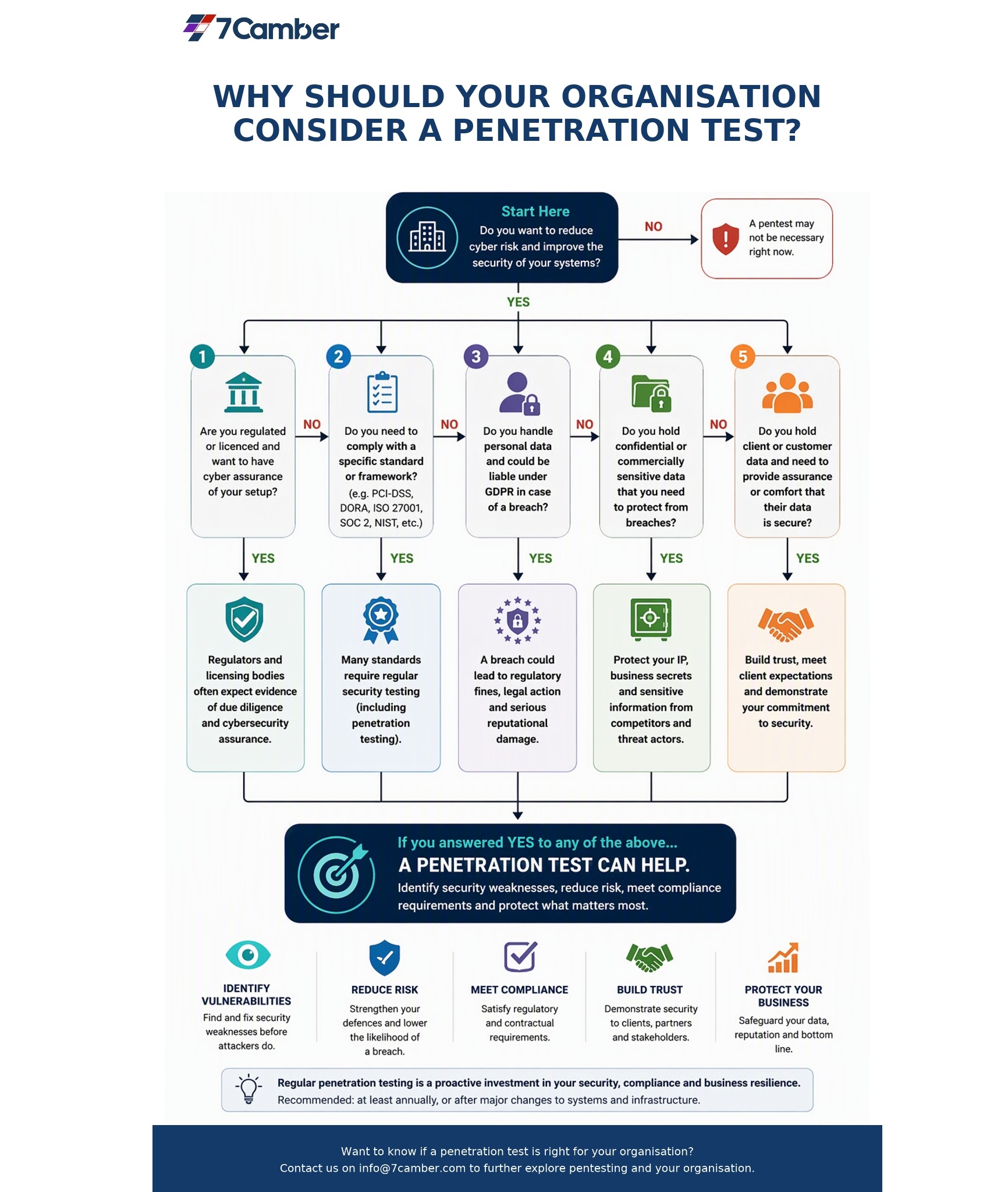
Modern organisations rely on web applications more than ever. These applications run customer portals, eCommerce stores, online banking systems, SaaS dashboards, booking platforms, and countless business functions. Because of this, the security of these systems directly affects the security of the entire business.
This is why web app pentesting has become one of the most important steps in managing business risk. It is no longer something you perform only when a regulator requests it. Instead, it should be part of your normal operational cycle, just like financial audits, continuity tests, and security reviews.
In this article, we explore what web app pentesting is, why it matters, and how it protects your organisation from real and costly threats. We will also look at examples from different industries to show the business value of regular web app pentesting.
1. What Is Web App Pentesting?
Web app pentesting (web application penetration testing) is a structured, ethical security assessment of a web application. Its purpose is to identify vulnerabilities before attackers can exploit them. Unlike automated scans, a pentest includes manual techniques, creative attack paths, and scenario-based testing that reflect real‑world attacker behaviour.
During web app pentesting, security experts examine:
- Authentication and session handling.
- Access controls and role permissions.
- APIs and integrations.
- Business logic.
- Payments and transactions.
- Data storage and processing.
- Cloud configurations.
- Third‑party components.
- Common OWASP Top 10 risks.
Web applications evolve constantly. New features, API changes, code updates, and configuration adjustments happen weekly or even daily. Because of this, a previously secure application can become vulnerable after a single update.
Web app pentesting helps you detect these issues early, reducing the chances of a breach.
2. Why You Need Web App Pentesting
Most companies wonder: “Why should I pentest my web applications?” The answer is simple. Web applications are the most exposed part of your digital infrastructure. They are public-facing, always online, and often connected to internal systems.
Here are the main reasons why you need web app pentesting.
2.1 Web apps are attackers’ favourite target
Cybercriminals focus heavily on web applications. They attack login pages, APIs, payment flows, admin portals, file uploads, and exposed endpoints. If there is a weakness, they will find it.
Web app pentesting gives you visibility into these weaknesses before attackers discover them.
2.2 Web apps store and process sensitive data
Almost every modern business processes sensitive data through its web applications. This includes:
- Personal information.
- Financial data.
- Medical records.
- Order details.
- Authentication credentials.
- Business-critical data.
Web app pentesting ensures this information is properly protected.
2.3 Cyber incidents cause financial and reputational damage
A security incident can lead to:
- Costly outages.
- Direct financial loss.
- Data breaches.
- Regulatory penalties.
- Loss of customer trust.
- Contract termination.
Most incidents are the result of vulnerabilities that could have been discovered through a pentest.
2.4 Web app pentesting strengthens your business resilience
Pentesting is not just a security task. It protects:
- Revenue.
- Customer confidence.
- Operations.
- Your brand reputation.
- Your competitive advantage.
A secure application supports long-term business growth.
3. What Happens If You Don’t Pentest Your Web Applications?
Ignoring web application security carries several risks. These risks are not theoretical; they affect organisations every day.
3.1 Data breaches
Many data breaches begin with simple web application flaws, such as:
- SQL injection.
- Cross-site scripting (XSS).
- Insecure direct object references (IDOR).
- Authentication bypasses.
- Weak API security.
Web app pentesting helps uncover these issues early.
3.2 Account takeover
Weak security controls allow attackers to take over user accounts. This is especially damaging for:
- Banking portals.
- SaaS applications.
- eCommerce accounts.
- Loyalty or reward systems.
Pentesting identifies these risks before they escalate.
3.3 Business logic abuse
Attackers often manipulate application logic to benefit themselves. They exploit:
- Discount code logic.
- Withdrawal flows.
- Payout processes.
- Bonus or credit systems.
- Basket manipulation.
- Pricing calculators.
A good web app pentest checks for these hidden risks.
3.4 Fraud and financial loss
In platforms handling payments or transactions, even a small vulnerability can result in fraud. Pentesting helps protect your revenue and financial systems from manipulation.
3.5 Regulatory and contractual penalties
While many regulations do not explicitly require pentesting, they do require secure systems. A breach caused by negligence can trigger heavy fines.
A regular web app pentest demonstrates due diligence and responsible governance.
4. Industry Examples: Why Web App Pentesting Matters Everywhere
Every industry uses web applications differently. Below are practical examples showing why a web app pentest is essential.
4.1 Financial Services and FinTech
Banks and FinTech applications handle:
- Payments.
- Identity verification.
- Account management.
- Wallets and transfers.
A web app pentest ensures attackers cannot bypass controls or access customer funds. Improving trust is essential in financial services.
4.2 eCommerce and Retail
eCommerce platforms rely heavily on:
- Shopping carts.
- Inventory APIs.
- Payment gateways.
- Customer profiles.
Attackers target these systems to steal data or manipulate orders. A web app pentest protects revenue and customer trust.
4.3 Healthcare and Medical Services
Healthcare systems store some of the most sensitive data. Vulnerabilities in portals, lab systems, referral platforms, or appointment systems can expose patient information. A web app pentest helps avoid damaging privacy breaches.
4.4 SaaS Platforms
SaaS platforms manage business-critical data for thousands of users. Risks include:
- Multi-tenant isolation issues.
- Insecure admin roles.
- Exposed API endpoints.
- Misconfigured cloud components.
Pentesting helps ensure the security and reliability expected by enterprise clients.
4.5 Gaming and iGaming
Gaming and iGaming applications are frequent targets for:
- Balance manipulation.
- Bonus abuse.
- Betting fraud.
- Account takeover.
Web app pentesting protects both platform integrity and regulatory compliance.
5. What Web App Pentesting Includes
A high-quality web app pentest covers the following areas:
- Mapping and discovery of the application.
- Authentication testing.
- Session and token security.
- API testing.
- Access control and privilege escalation.
- Injection testing (SQL, command, NoSQL).
- Business logic abuse.
- File upload security.
- Cloud configuration checks.
- Testing for OWASP Top Ten vulnerabilities.
- Detailed reporting with remediation steps.
This process gives you a clear understanding of your risk level and how to reduce it.
6. Web App Pentesting as a Regular Business Practice
A web app pentest is most effective when performed regularly. This is because applications evolve quickly. New code introduces new risks.
A recommended schedule is:
- Full web app pentest: annually.
- Focused pentest: after major releases.
- Automated vulnerability scans: monthly or quarterly.
- Integrated DevSecOps controls: continuously.
Treating web app pentesting as part of your routine risk management keeps your exposure low and your business stable.
7. Business Benefits of Regular Web App Pentesting
A regular web app pentest delivers several long-term benefits:
- Early detection of vulnerabilities.
- Reduced chance of data breaches.
- Stronger customer trust.
- Lower remediation costs.
- Improved collaboration between development and security teams.
- Better compliance posture.
- More stable operations.
- Stronger brand reputation.
Most importantly, a web app pentest gives your leadership confidence in the resilience of your systems.
8. Final Thoughts: Web App Pentesting Is Not Optional
Your web applications hold your business together. They carry your reputation, your customer experience, and your operational continuity. Because of this, they must be protected with serious, ongoing effort.
A web app pentest is not a checkbox or a compliance requirement. It is a proactive investment in the future and strength of your organisation.
Companies that understand this do not ask “Do I need a web app pentest?”
They ask “How do we ensure we test regularly to stay ahead of attackers?”