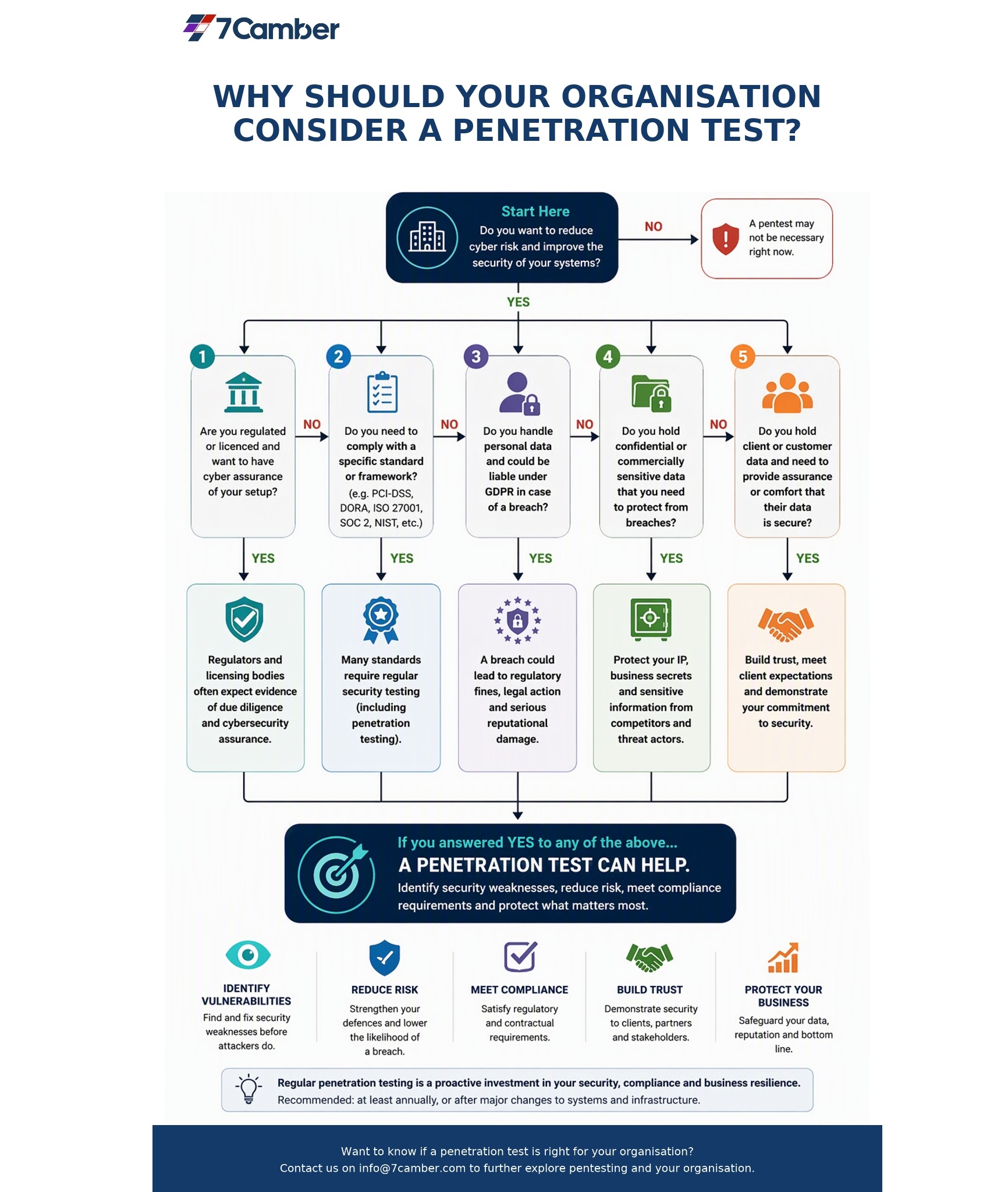
Many organisations understand the value of penetration testing. However, many still struggle with one important question: when should you run a penetration test?
The answer is simple. Penetration testing should not be an occasional compliance exercise. Instead, it should be a regular part of your cybersecurity strategy. Conducting a penetration test at the right time helps uncover vulnerabilities before cybercriminals exploit them. It also provides assurance that your security controls work as intended.
In this article, we explore the key situations that call for a penetration test and explain the risks of not carrying one out.
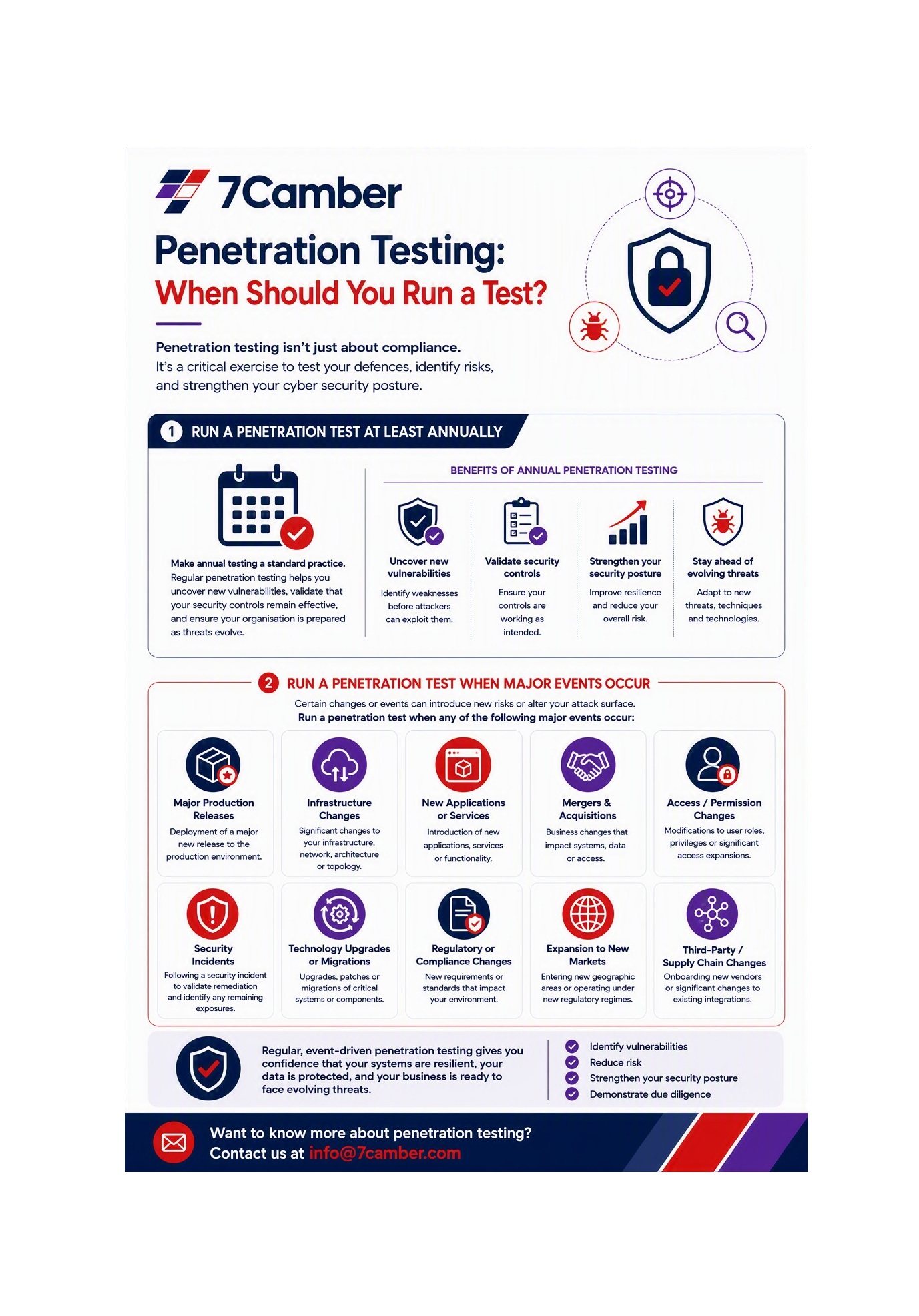
1. Run a Penetration Test at Least Once Per Year
An annual penetration test should be the minimum baseline for most organisations.
Technology environments change constantly. New vulnerabilities are discovered daily. Systems are updated, users change roles, and new software is introduced. As a result, security controls that were effective a year ago may no longer provide the same level of protection.
Why annual testing is important
Annual penetration testing helps organisations:
- Identify newly introduced vulnerabilities
- Validate existing security controls
- Measure security improvements over time
- Reduce overall cyber risk
- Stay ahead of emerging threats
Risk of not testing annually
Without regular testing, security weaknesses can remain hidden for months or even years. Attackers often discover these weaknesses first. This can lead to data breaches, ransomware incidents, operational disruption, and reputational damage.
2. Run a Penetration Test After a Major Production Release
Every major software release introduces new code, new features, and new opportunities for vulnerabilities.
Even organisations with secure development processes can unintentionally introduce security flaws into production environments.
Why testing is important
A penetration test can identify:
- Authentication weaknesses
- Authorisation flaws
- Business logic vulnerabilities
- Misconfigurations
- API security issues
Risk of not testing
A vulnerability introduced during a release may provide attackers with immediate access to sensitive systems or data. Identifying security issues before attackers do can significantly reduce the likelihood of a successful compromise.
3. Run a Penetration Test Following Infrastructure Changes
Infrastructure changes often expand or alter an organisation’s attack surface.
Examples include:
- Cloud migrations
- Network redesigns
- New server deployments
- Firewall changes
- Hybrid infrastructure projects
Why testing is important
Infrastructure projects frequently involve complex configurations. A penetration test verifies that systems remain secure after changes are introduced.
Risk of not testing
Configuration errors are one of the most common causes of security incidents. A single mistake can expose services, weaken access controls, or create unintended attack paths.
4. Run a Penetration Test Before and After Launching New Applications
New applications create new risks.
Whether the application is customer-facing or internal, it should be assessed before becoming a critical part of business operations.
Why testing is important
A penetration test helps identify:
- Application vulnerabilities
- Insecure integrations
- Weak authentication controls
- Sensitive data exposure
- Session management flaws
Risk of not testing
A vulnerable application can become the easiest route into your organisation. In many cases, a single application weakness is all an attacker needs to gain access.
5. Run a Penetration Test During Mergers and Acquisitions
Mergers and acquisitions often introduce unknown cybersecurity risks.
When organisations combine systems and networks, they also inherit each other’s vulnerabilities while potentially introdcing new ones due to the changes to systems and infrastructure.
Why testing is important
Penetration testing helps organisations:
- Assess inherited risks
- Validate security controls
- Identify vulnerabilities in acquired environments
- Protect integration projects
Risk of not testing
An acquired organisation may already have compromised systems or critical weaknesses. Connecting environments without proper testing can expose both organisations to attack.
6. Run a Penetration Test After Access and Permission Changes
Changes to user permissions can significantly affect security.
This is especially true when privileged accounts, administrators, contractors, or third parties receive expanded access.
Why testing is important
Testing helps determine whether access controls are working correctly and whether privilege escalation opportunities exist.
Risk of not testing
Excessive permissions increase the likelihood of insider threats and unauthorised access. Attackers frequently target privileged accounts because they provide access to sensitive systems and data.
7. Run a Penetration Test After a Security Incident
A security incident should never be considered fully resolved until remediation has been validated.
Why testing is important
Penetration testing can:
- Verify remediation efforts
- Identify remaining vulnerabilities
- Confirm attackers no longer have access
- Validate updated security controls
Risk of not testing
Remediation gaps can leave the organisation vulnerable to repeat attacks. In some cases, attackers regain access through weaknesses that were not properly addressed.
8. Run a Penetration Test After Technology Upgrades or Migrations
Technology upgrades often focus on functionality, timelines, and performance. Security can sometimes become a secondary consideration.
Why testing is important
A penetration test helps confirm that:
- Systems are configured securely
- Data remains protected
- Security controls function correctly
- Access permissions remain appropriate
Risk of not testing
Upgrades and migrations can introduce hidden vulnerabilities that go unnoticed until a breach occurs.
9. Run a Penetration Test When Compliance Requirements Change
New regulations often require organisations to reassess their security controls.
Why testing is important
Penetration testing provides evidence that security measures are effective and operating as intended.
Risk of not testing
Failure to validate controls can result in compliance failures, audit findings, financial penalties, and reputational harm.
10. Run a Penetration Test Before Expanding into New Markets
Business growth usually requires new systems, new users, and new infrastructure.
Why testing is important
Testing helps ensure security controls remain effective as the organisation expands into new regions or jurisdictions.
Risk of not testing
Rapid expansion can create security blind spots. If vulnerabilities are overlooked, attackers may exploit them before the organisation has time to identify and address them.
11. Run a Penetration Test After Third-Party or Supply Chain Changes
Modern organisations are more interconnected than ever. New suppliers, software providers, and integration partners all introduce potential risk.
Why testing is important
A penetration test can identify vulnerabilities created through:
- Third-party integrations
- Vendor access
- Shared systems
- Connected applications
Risk of not testing
Supply chain attacks continue to grow in both frequency and sophistication. A weakness in a trusted third party can become a direct path into your environment.
The Bottom Line: Penetration Testing Should Be Proactive, Not Reactive
If you’re wondering when to run a penetration test, the answer is not simply once a year. While annual testing provides an important security baseline, organisations should also conduct penetration testing whenever significant changes occur.
The cost of a penetration test is almost always lower than the cost of a successful cyber attack.
By testing regularly and after key business or technology events, organisations can identify vulnerabilities early, reduce risk, validate security controls, and strengthen their overall security posture.
The real question is not whether you should run a penetration test. The real question is whether your organisation can afford the consequences of not running one.